
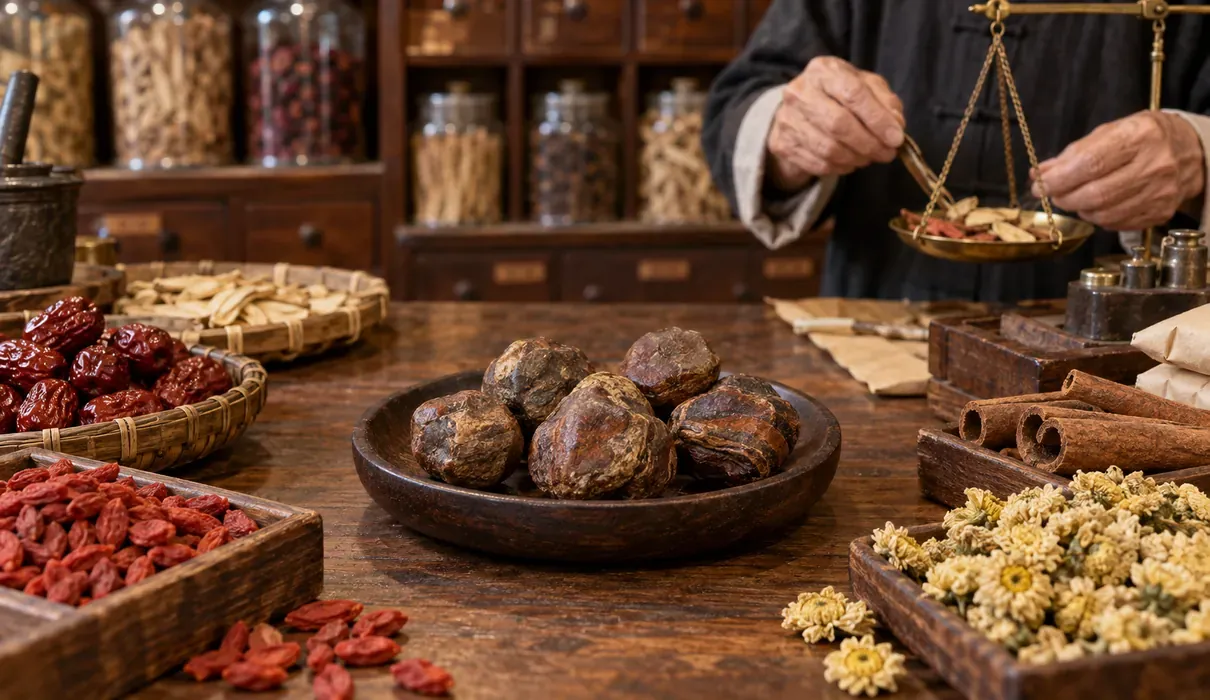
The first time someone tells you about porcupine dates, you probably do a small mental double-take. Dates? From porcupines? It sounds like a bad translation or a herbal-shop misunderstanding.
But porcupine dates are real. They’re not actually dates (the fruit). And they’re one of the most prized traditional health products in Malaysia, with a price tag that makes most pharmacy supplements look cheap by comparison.
This guide is for people who keep hearing the term, see the products at Chinese medicine shops in Penang or KL, or have a relative who insists on buying them, and want to actually understand what they are before forming an opinion.
The Quick Definition
Porcupine dates are stone-like deposits called bezoars that form naturally inside the digestive systems of certain wild porcupines. Specifically, they form in the stomach or intestines of porcupines that have eaten certain medicinal plants and roots, building up gradually over months or years.
When the porcupine dies, the bezoar can be retrieved. In Chinese, these are called 箭猪枣 or 豪猪枣 (literally “porcupine date”). In Malay, batu landak (porcupine stone). In English, the name “porcupine dates” stuck because of the loose visual resemblance to dried dates, though they’re hard, mineral-rich, and not edible in their whole form.
Why Malaysia Is the Centre of This
You might wonder why this particular product has such a strong association with Malaysia rather than China, where most TCM products originate.
A few reasons. First, the supply. Wild porcupines that produce these bezoars range across the deep forests of Peninsular Malaysia and Borneo, and the local population has historically been one of the best sources globally. Hunters have been collecting these stones for centuries, and the trade routes were already established when traditional Chinese medicine was first imported by Chinese-Malaysian families.
Second, demand. Malaysia’s Chinese-Malaysian community has maintained strong TCM traditions across generations. Porcupine dates fit cleanly into the framework of recovery and tonic supplements that families turn to during illness, surgery, or postpartum care.
Third, regulation. Authentic porcupine bezoar can only be sourced legally through licensed permits. Tong Xin Yuan, the largest porcupine dates wholesaler in Malaysia, holds a Wildlife Trade and Possession Permit and has been operating since 2004. For Chinese-language readers, the same brand operates at 箭猪枣 (tongxinyuanglobal.com).
What’s Actually In Them
This is the part most beginners are surprised by. Porcupine dates aren’t just folklore. Modern lab analysis has confirmed they contain meaningful concentrations of several bioactive compounds.
The headline number is tannins, roughly 93 percent of certain types. Tannins are antioxidants found in much smaller quantities in green tea (around 2.65 percent) and pomegranate (around 1.50 percent). They have well-documented properties in tissue repair and have been shown to bind heavy metals like lead and mercury.
Beyond tannins, porcupine dates contain bromelain (a protein-digesting enzyme also found in pineapple, but at far higher concentrations in porcupine bezoar), plant sterols (also called phytosterols, with antioxidant properties), and a full panel of amino acids that play a role in tissue repair and immune function.
This is what separates porcupine dates from products that are pure tradition with no active substance. They have a track record in folk use, plus a measurable chemical profile that lines up with what they’re traditionally used for.
What Are They Used For?
Five recovery areas dominate the use cases:
- Cancer recovery, especially during and after chemotherapy
- Diabetic wound healing and post-surgical wound recovery
- Dengue recovery, especially in the convalescent phase
- Flu and post-vaccination recovery, where energy is depleted
- Postpartum recovery for new mothers
Each of these has a fuller treatment guide on Tong Xin Yuan’s site that covers the specific compounds involved and how the product is typically used in each context.
One important note: these aren’t claims that porcupine dates cure cancer or diabetes. Nobody serious in the industry frames them that way. The framing is recovery support, taken alongside actual medical treatment, not as a replacement for it.
What Do They Cost?
This is where most beginners flinch. Porcupine dates aren’t cheap.
Across Tong Xin Yuan’s four product lines, prices range from RM700 (1g of the Premium Nano Concentrated Extract) to RM54,000 for the largest premium aged whole bezoars. The high prices reflect both the scarcity of authentic raw material and the cost of legal, licensed sourcing.
For most first-time buyers, the entry point is the smallest powder size at RM700. It’s a manageable spend that lets you confirm the product is right for your situation before committing more.
How to Know If You Should Care
Porcupine dates aren’t for everyone. They’re a specific product for specific situations. The honest answer to “should I buy this?” depends on a few things:
- Are you (or someone you’re caring for) recovering from a major health event like surgery, chemotherapy, dengue, or childbirth?
- Do you already have a relationship with traditional medicine or do you trust someone in your family who does?
- Can you afford the entry price (around RM700) without straining your budget?
If yes to all three, it’s worth understanding the product properly. If no to any of them, there are simpler and cheaper recovery products that may suit you better.
What to Watch Out For
Two main things.
First, counterfeits. Estimates suggest more than half of what’s sold under the porcupine dates name in the Malaysian market is dyed or fake material with no active ingredients. The cheap end of the market is mostly counterfeit. Only buy from suppliers who can show USM testing (Universiti Sains Malaysia, screening for 46 harmful chemicals) and SGS certification (independent verification for heavy metals).
Second, marketing claims. If a seller tells you porcupine dates “cure” anything, walk away. The real claim is recovery support, not cure. Anyone overselling the product is either misinformed or trying to extract more from you than the product is worth.
Where to Learn More
If this guide has caught your attention, the cleanest places to dig deeper are the official sources. Tong Xin Yuan’s main site explains the products, certifications, and treatment areas in detail. The Chinese version, 同心圆 (tongxinyuanglobal.com), covers the same information for buyers more comfortable in Chinese.
Don’t rely on Facebook sellers, herbal shop verbal claims, or random Reddit threads. The market is complicated enough that you want to learn from a verified source first, then make your own decision from there.
Porcupine dates aren’t magic. But they’re not snake oil either. They’re a specific traditional product with a real (if specialised) place in Malaysian recovery culture. Understanding them properly is the first step to buying or skipping intelligently.