
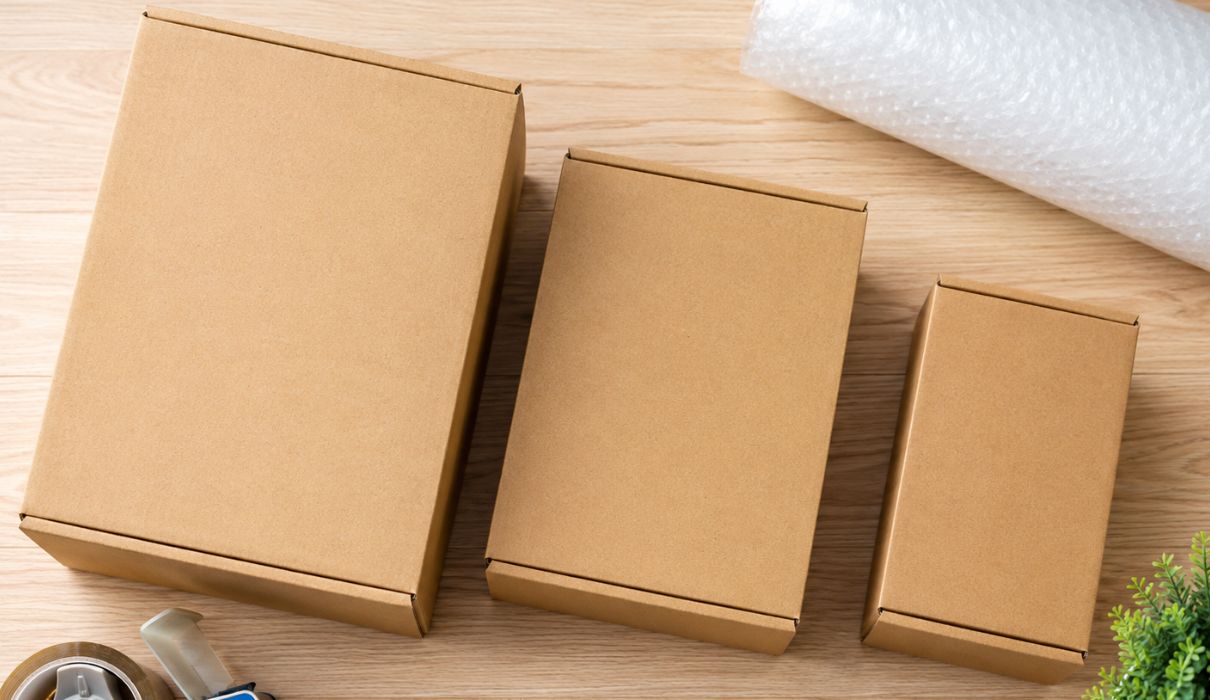
When you run an online shop, it is easy to put all your energy into the product, the photos and the ad budget, then just grab whatever box is cheapest when it is time to post the order. But the box is the first thing your customer actually touches. It is also the only thing protecting your item during a long, bumpy ride through sorting hubs, lorries and a few not so gentle hands.
Pick the right box and your parcels arrive in one piece, your postage stays low and your customer’s first impression is a good one. Pick the wrong one and you end up paying for broken goods, refunds, one star reviews and wasted postage. So let’s get into how to pick a Carton Box that actually suits the way you sell, with Malaysian online sellers in mind.
What Your Box Is Really Doing for You
Most people treat packaging as a cost to cut down. It is more useful to see it as a job with four parts.
It protects the product. The moment a parcel leaves your hands, it gets stacked, dropped and shifted around many times. A box that resists crushing and soaks up knocks is doing real work at every stop.
It controls your postage cost. Couriers do not only weigh your parcel, they also measure it. Send a small item in a big box and you pay for all that empty air inside. Right sizing your box is one of the easiest ways to stop overpaying.
It shapes the first impression. A snug, clean, easy to open parcel tells the customer that you run a proper business. A crushed or oversized box says the opposite, no matter how good the item inside is.
It carries your brand. Even a plain box can be made clearly yours, and a printed one turns every delivery into a small piece of marketing.
Know Your Box Styles First
Before you worry about sizes, it helps to know the main box types and what each one is good at.
The RSC box (Regular Slotted Container) is the workhorse of e-commerce. The flaps fold in from the top and bottom and meet in the middle, then you seal it with tape. It is fast to put together, handles almost any product, and is what most sellers reach for when posting clothes, books, gadgets and general goods.
The die cut or pizza style box uses a fold together lid and needs no tape. Because it opens neatly and looks tidy, it is a favourite for gifts, food items and anything where the moment of opening is part of the fun.
The document box is a bigger box with a lid, often with handles, made for files and paperwork rather than parcels. Handy if your business moves a lot of documents.
For most shops, RSC boxes will cover the bulk of your posting, with die cut boxes worth adding when presentation matters.
A Flute or B Flute: Reading the Cardboard
Corrugated cardboard gets its strength from a wavy inner layer, called the flute, sitting between two flat sheets. The size of that wave changes how thick, cushioned and stiff the box is. Two flute grades cover most needs.
| Feature | A Flute | B Flute |
|---|---|---|
| Thickness | Around 4.5 to 5.0 mm | Around 2.5 to 3.0 mm |
| Cushioning | Excellent | Good |
| Stacking strength | Very good | Excellent |
| Print surface | Good | Excellent |
| Best suited for | Fragile or heavy goods | General shipping, retail, printed boxes |
In simple terms, A Flute is the thicker, more cushioned option, so reach for it with fragile things like glassware and ceramics, or heavier items that need extra backbone. B Flute is slimmer, cheaper, stacks well and takes print nicely, which makes it the sensible default for everyday products. A good rule of thumb is to start with B Flute and step up to A Flute when an item is fragile or goes past roughly 5 kg.
Note: The flute thickness ranges above follow common corrugated board grading and the cartonbox.my reference material.
Sizing the Box to the Product
Box size is where most of the savings, and most of the mistakes, happen. Too big and you waste money on postage while the item rattles around inside. Too small and there is no room to protect it. Here is a simple way to get it right.
1. Measure the product. Write down the length, width and height in centimetres. For odd shapes, measure the widest point in each direction.
2. Leave room for padding. Add around 2 to 3 cm to each side for everyday items so there is space for bubble wrap or paper. For fragile goods, give it 4 to 5 cm.
3. Match to the nearest stock size. Round up to the closest box you can buy rather than down. An item measuring 15 by 10 by 8 cm, with 2 cm of padding all round, needs a box near 19 by 14 by 12 cm, so a 20 by 15 by 12 cm box does the job.
4. Check the weight. Make sure the box and flute grade can carry the load. Heavier products want thicker walls or A Flute, and past about 5 kg you should consider double wall board.
As a rough starting point for common product types:
| What You Are Selling | Suggested Box Size | Flute |
|---|---|---|
| Jewellery, small accessories | 15 x 10 x 10 cm | B Flute |
| Cosmetics, skincare | 20 x 15 x 10 cm | B Flute |
| Folded clothing, T-shirts | 30 x 22 x 10 cm | B Flute |
| Shoes | 35 x 25 x 15 cm | B Flute |
| Books, stationery | 25 x 20 x 10 cm | B Flute |
| Small electronics | 25 x 20 x 15 cm | A Flute |
| Glassware, ceramics | 25 x 25 x 25 cm | A Flute |
| Gift hampers | 30 x 30 x 20 cm | B Flute |
Treat these as a starting point, not gospel. Always test with your own products before you order in bulk.
Why a Bigger Box Costs More Than You Think
Here is the part that surprises many new sellers. Couriers usually charge on whichever is higher, the parcel’s actual weight or its volumetric weight, sometimes called dimensional weight. Volumetric weight is worked out from the box size, commonly like this:
So a 40 by 30 by 25 cm box works out to 5 kg of volumetric weight. If the item inside only weighs 2 kg, you still get billed as though it were 5 kg, because the box takes up that much space. That single fact is why right sizing pays for itself.
A few habits keep your postage down:
- Use the smallest box that still leaves room for padding.
- Post soft, non fragile items like clothes and fabrics in polymailers instead of boxes.
- Flatten and fold where you can.
- If you ship in volume, ask your courier about negotiated rates.
Note: The divided by 6000 figure and the formula come from the cartonbox.my source. Divisors and parcel size or weight limits differ between couriers and change over time, so please confirm the current numbers with your courier before relying on them.
Cheap Boxes Are Not Always the Cheap Option
Buying the flimsiest box on the shelf feels thrifty, but it often costs more once you count the fallout. A crushed parcel becomes a damaged product, then a complaint, a bad review, and a refund or a reship. The few sen you saved per box disappear the first time you send a replacement.
The smarter move is to spend where it counts. Fragile, high value or presentation heavy items deserve better packaging, while sturdy everyday goods do fine with standard boxes. Whatever you settle on, buying in bulk is the biggest lever for bringing the cost per box down, so once you know your steady sizes, order in larger runs. A reliable Carton Box Supplier will also offer low or no minimum order quantity, which lets you trial sizes first if you are just starting out.
Turning a Plain Box Into Your Brand
Your box is free advertising space, and you do not need a custom print run to use it. A few easy options:
- Logo stickers to seal the flaps.
- Printed packing tape carrying your brand name.
- A rubber stamp on plain kraft board.
- A thank you card tucked inside.
- Coloured tissue paper around the product.
Plain kraft boxes already look clean and eco friendly, which suits a young brand. Once your orders are steady, custom printed boxes with your logo and colours lift the unboxing experience and look properly professional. Many Malaysian suppliers now print with no minimum order, so even small sellers can get branded boxes without a big upfront spend. If you want to understand the full range of materials on offer, it is worth getting to know your Packaging Box Supplier and what services they provide.
The Mistakes That Cost Sellers Money
A handful of errors come up again and again:
- Boxes too big, the number one waste, where you pay for air and the item slides around.
- Boxes too small, with no room for padding, which means damage in transit.
- Wrong flute for the job, where thin board under heavy or fragile goods invites crushing.
- No inner protection, since the box alone rarely saves a fragile item, so fill the gaps.
- Skipping samples, because what looks right on a spec sheet may fail with the real product.
- Ignoring the open, as a parcel that is a struggle to open spoils an otherwise good experience.
A Quick Checklist Before You Order
- Measure the product, length, width and height in cm.
- Add padding room, 2 to 3 cm normally, 4 to 5 cm for fragile.
- Check the weight against the box strength.
- Pick the flute, A for fragile or heavy, B for general use.
- Pick the style, RSC to post, die cut to present.
- Work out the volumetric weight so the postage will not surprise you.
- Decide on branding, plain, stickers or printed.
- Order samples and test before you commit.
- Plan inner protection where it is needed.
- Review now and then as your range and volumes change.
The Short Version
Choosing carton boxes is not complicated, but it pays off when you plan a little. Start from what you actually post, measure it, judge how fragile and heavy it is, then pick a box that protects it without drowning it in empty space. Stick with B Flute by default, step up to A Flute for the fragile and heavy stuff, and keep an eye on volumetric weight so you are not posting air. Do not ignore the moment your customer opens the parcel, because that is part of what they are paying for. Start small, test with real shipments, watch your damage rate, and improve as you grow. Done well, the humble Carton Box quietly protects your margins, your reviews and your good name.